Explaining CNN-Based Active Tuberculosis Detection through Saliency Mapping
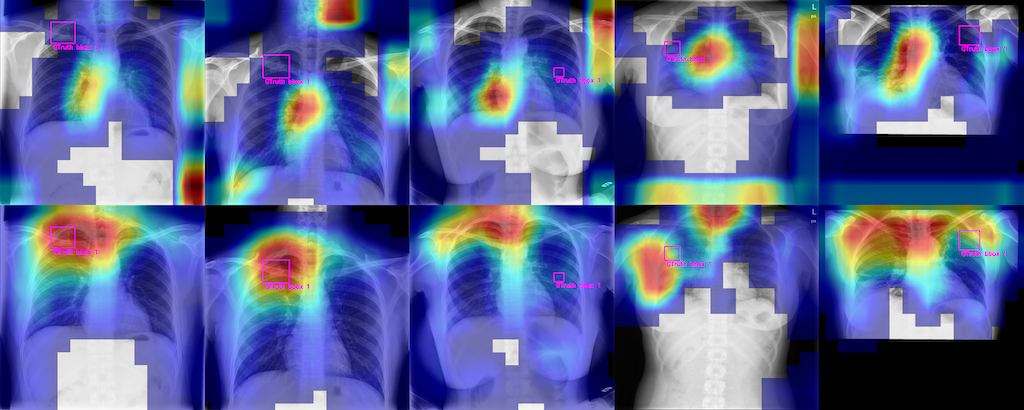
Convolutional networks can flag patients with active tuberculosis from their chest X-rays, but in a clinical setting a prediction is only as useful as the trust placed in it. Saliency maps, the heatmaps that claim to show where a model looked, are the usual way to justify such decisions. This raised the question at the centre of the thesis: for active-tuberculosis detection, which saliency methods are genuinely faithful to the model, and does adding more annotated data improve detection in the first place?
Saliency methods such as Grad-CAM are widely used yet rarely checked against ground truth, because the data to check them is scarce. The TBX11K dataset, which provides expert bounding boxes around the disease, makes that check possible. The hypothesis was that no single saliency method would work well across all architectures, and that a principled, ground-truth-based metric could identify the best model-and-explanation pairing rather than leaving it to guesswork.
Adding TBX11K data measurably improved state-of-the-art, replicable classifiers, settling the second question affirmatively. The explanations were then assessed along two axes that are easily confused: faithfulness, whether the heatmap really reflects what the model uses, measured by removing the highlighted evidence and observing the effect, and localisation, whether it points where the disease actually is, measured against the expert boxes. Because a method can score well on one and badly on the other, a combined metric was proposed to rank model-and-explanation pairings on both at once. The ranking confirmed that no single saliency method dominates across architectures, and identified a multi-label DenseNet-121 paired with Eigen-CAM as the best available trade-off.
The hypothesis holds in both parts: there is no universal explanation method, and a ground-truth-based metric can pick the right pairing rather than leaving it to habit. The practical consequence is a change in how such systems should be built — model and explanation must be chosen together, since a good classifier with the conventionally chosen heatmap may be justifying itself with evidence it does not use. The recommended pairing is offered for accurate and correctly localised active-tuberculosis detection. The results were published at EuVIP 2024 and fed directly into the group’s work on refining and de-biasing tuberculosis detection.