Epidemiology — Anticipating Risk
Machine learning on routine clinical records, chest radiographs, and patient-contact networks to flag who is most at risk — from diabetic-foot complications to drug-resistant infection to tuberculosis.
Partnerships
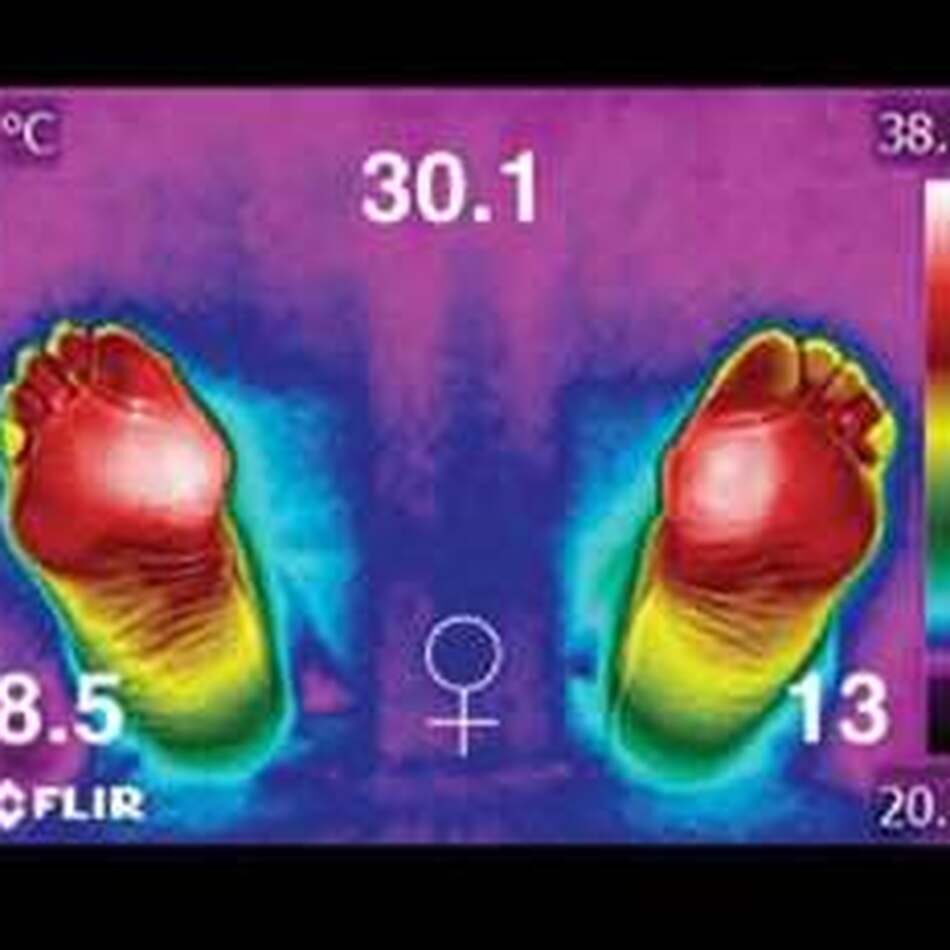
Cover: infrared plantar thermography of both feet, the kind of routine signal used to flag diabetic-foot risk before ulceration, from Renero-C, Diabetic Foot & Ankle 2017;8:1361298 (CC BY 4.0).
Epidemiology is ultimately about anticipating where the next case, or the next complication, will come from. This strand applies machine learning to the everyday data of clinical care — routine measurements, chest radiographs, and evolving patient-contact networks — to flag who is most at risk and to detect disease earlier, so that prevention can be targeted before harm is done. The common thread is a shift from reacting to cases toward getting ahead of them.
Major achievements
Much of the work is about spotting high-risk patients in data a clinic already collects. From 250 people with diabetes described by 54 routine risk factors — the kind an attendant or the patient can record on a questionnaire, with no clinical examination required — an unsupervised competitive-neuron-layer method separated the cohort into risk groups without any labelled outcomes; against a nurse-annotated validation cohort of 73 it reached 90% accuracy at 100% specificity and 71% sensitivity, so that those it does flag for priority follow-up to prevent diabetic-foot complications can be acted on with confidence. The same instinct, anticipate rather than react, drove STM-GNN, a space-time-and-memory graph neural network predicting which patients are at risk of multidrug-resistant hospital-acquired infection as contact networks evolve. Coupling a heterogeneous graph over patients, beds and rooms with a recurrent memory of each patient’s colonisation history, and feeding the two back into one another, it reached 0.84 area under the curve on a real and deliberately sparse infection-control cohort, the most balanced performance of any method tried, classical baselines and other temporal graph networks alike.
The other strand is earlier detection, and a critical synthesis of how artificial intelligence now reads chest X-rays for tuberculosis. Computer-aided detection has reached accuracy on a par with human radiologists, with areas under the curve of roughly 0.83 to 0.94 in triage studies, which led the World Health Organization to conditionally recommend it in place of a human reader for those aged fifteen and over; used this way it is projected to cut diagnostic costs by roughly a fifth to a third. Our review weighed that promise against its conditions: accuracy drifts with age, body mass, HIV status and smear-negative disease, decision thresholds must be recalibrated locally rather than taken from the vendor, evidence in children is absent, and rapid version churn means a product’s published accuracy may not describe the version actually deployed. The conclusion for elimination is a measured one: automated screening can genuinely widen access to fast, consistent diagnosis, but only with local calibration, independent external validation, and deliberate attention to equity will it help end tuberculosis rather than entrench its disparities.
Key publications
- STM-GNN: Space-Time-and-Memory Graph Neural Networks for Predicting Multi-Drug Resistance Risks in Dynamic Patient Networks. International Conference on Artificial Intelligence in Medicine, 2025. Conference Paper · doi:10.1007/978-3-031-95838-0_16 · Related Preprint doi:10.1101/2025.05.27.25327491
- The rise of artificial intelligence reading of chest X-rays for enhanced TB diagnosis and elimination. The International Journal of Tuberculosis and Lung Disease, 2023. Journal Article · doi:10.5588/ijtld.22.0687
- Competitive neural layer-based method to identify people with high risk for diabetic foot. Computers in Biology and Medicine, 2020. Journal Article · doi:10.1016/j.compbiomed.2020.103744
Supervised theses
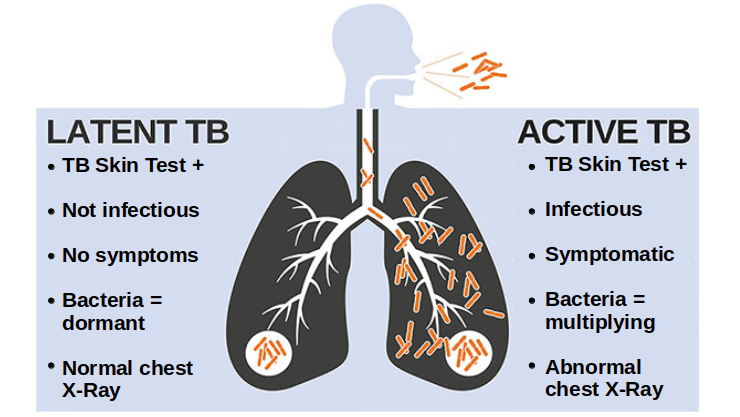
Machine Learning for Adverse-Event Detection in Latent Tuberculosis Treatment
Preventive tuberculosis therapy works, but its side effects make patients stop. This thesis asked whether the patients most at risk of those side effects can be spotted in advance from routine clinical data.